
 7 min
Inwersja brzmi poważnie, ale słyszysz ją częściej, niż myślisz: w mailach z pracy, w opowieściach i w filmach. Na początek masz krótkie zasady, a pod nimi 51 zadań w sześciu zestawach, od Never have I po Had I known. Każde sprawdza się od razu, a po dobrej odpowiedzi możesz odsłuchać całe zdanie.
Wolisz papier? Pod ćwiczeniami jest karta pracy PDF do druku i osobna wersja z kluczem odpowiedzi.
Inwersja w skrócie
Never, Rarely, Seldom na początku zdania
Kiedy zaczynasz od słowa z przeczeniem albo ograniczeniem, dalej idzie szyk jak w pytaniu: najpierw czasownik posiłkowy, potem osoba. Brzmi to mocniej i bardziej uroczyście niż zwykłe zdanie.
- Never have I seen such a mess. (Nigdy nie widziałem takiego bałaganu.)
- Rarely do we eat out during the week. (Rzadko jemy na mieście w tygodniu.)
Not only… but also
Po Not only stawiasz do, does, did albo inny czasownik posiłkowy. Druga część zdania, z but also, ma już zwykły szyk.
- Not only did she finish the report, but she also checked all the numbers. (Nie tylko skończyła raport, ale też sprawdziła wszystkie liczby.)
- Not only is the hotel cheap, but it is also close to the beach. (Hotel jest nie tylko tani, ale też blisko plaży.)
Hardly, No sooner, Little did I know
Tak opowiadasz o tym, co stało się zaraz potem, albo o czymś, o czym nie miałeś pojęcia. Po Hardly idzie when, a po No sooner idzie than.
- Hardly had I sat down when the phone rang. (Ledwo usiadłem, a zadzwonił telefon.)
- No sooner had we arrived than it started to rain. (Ledwo przyjechaliśmy, zaczęło padać.)
- Little did I know that he was her brother. (Nie miałem pojęcia, że to jej brat.)
Only then, Only when, Only after
Inwersja przychodzi dopiero w drugiej części zdania, po tym, co następuje po only. To znaczy „dopiero wtedy” albo „dopiero kiedy”.
- Only when I got home did I realize I had lost my wallet. (Dopiero w domu zorientowałem się, że zgubiłem portfel.)
- Only then did I understand the problem. (Dopiero wtedy zrozumiałem problem.)
Should, Had, Were zamiast if
W mailach i oficjalnych zdaniach możesz pominąć if i zacząć od Should, Had albo Were. Przeczenie robisz pełnym not: Had I not, nigdy Hadn’t I.
- Should you need any help, let me know. (Gdybyś potrzebował pomocy, daj znać.)
- Had I known about the traffic, I would have left earlier. (Gdybym wiedział o korkach, wyszedłbym wcześniej.)
- Were I in your position, I would take the job. (Na Twoim miejscu przyjąłbym tę pracę.)
Ćwiczenie 1: Never have I, Not only did she
Wpisz czasownik posiłkowy, osobę i czasownik w odpowiedniej formie. Pamiętaj o szyku jak w pytaniu.
Never ___ (I / see) such a long line at the airport.
have I seen
Rarely ___ (we / eat) dinner before eight.
do we eat
Seldom ___ (my boss / praise) anyone in meetings.
does my boss praise
Never ___ (I / hear) such a ridiculous excuse.
have I heard
Not only ___ (she / speak) French, but she also speaks German.
does she speak
Not only ___ (they / miss) the train, but they also lost their luggage.
did they miss
Hardly ___ (I / sit) down when my phone rang.
had I sat
No sooner ___ (we / arrive) at the beach than it started to rain.
had we arrived
Little ___ (I / know) that she was my new boss.
did I know
Only when I got home ___ (I / realize) that I had lost my keys.
did I realize
Ćwiczenie 2: Should you, Had I, Were I
Przepisz początek zdania bez if. Zacznij od Should, Had albo Were. W przeczeniu wpisz pełne not.
If you need any help, call me. → ___ any help, call me.
Should you need
If I had known about the delay, I would have taken a later flight. → ___ about the delay, I would have taken a later flight.
Had I known
If you have any questions, please contact our office. → ___ any questions, please contact our office.
Should you have
If we had left earlier, we wouldn’t have missed the show. → ___ earlier, we wouldn’t have missed the show.
Had we left
If the package arrives damaged, let us know. → ___ damaged, let us know.
Should the package arrive
If she had asked me, I would have helped her. → ___ me, I would have helped her.
Had she asked
If I were you, I would talk to HR. → ___ you, I would talk to HR.
Were I
If they hadn’t called, we would have waited all night. → ___ called, we would have waited all night.
Had they not
If you change your mind, just send me an email. → ___ your mind, just send me an email.
Should you change
Ćwiczenie 3: wybierz poprawną formę
Wybierz formę, która pasuje do początku zdania. Zwróć uwagę na szyk i na słowa when oraz than.
Not only ___ late, but he also forgot the documents.
- he was
- was he
- did he was
Rarely ___ such good service in a restaurant.
- we get
- do we get
- we do get
No sooner had I paid the bill ___ I saw the sale sign.
- when
- than
- that
Hardly had we started the meeting ___ the power went out.
- when
- than
- then
Little ___ that the company was about to close.
- we knew
- we did know
- did we know
Only after the meeting ___ how serious the problem was.
- did I understand
- I understood
- I did understand
___ you need a ride to the airport, just let me know.
- Should
- Would
- Had
___ I known it was your birthday, I would have bought you a gift.
- If
- Had
- Should
Never ___ so much snow in April.
- I have seen
- have I seen
- I saw
Ćwiczenie 4: wybierz poprawne zdanie
Najczęstsze pułapki: zwykły szyk po Never, brak did po Not only i zła forma po Had.
Pick the correct sentence.
- Never I have been to Asia.
- Never have I been to Asia.
- Never have been I to Asia.
Pick the correct sentence.
- Not only did we lose the game, but we also lost our best player.
- Not only we lost the game, but we also lost our best player.
- Not only lost we the game, but we also lost our best player.
Pick the correct sentence.
- Had I knew, I would have called you.
- Had I known, I would have called you.
- Had I know, I would have called you.
Pick the correct sentence.
- Only then I realized my mistake.
- Only then realized I my mistake.
- Only then did I realize my mistake.
Pick the correct sentence.
- Should you have any problems, call our help desk.
- Should you to have any problems, call our help desk.
- Should you having any problems, call our help desk.
Pick the correct sentence.
- Hardly I had closed the door when the doorbell rang.
- Hardly had I closed the door when the doorbell rang.
- Hardly had closed I the door when the doorbell rang.
Ćwiczenie 5: ułóż zdanie
Ułóż zdanie z rozsypanych słów. Każde zaczyna się od słowa, po którym przychodzi inwersja.
Powiedz, że nigdy nie widziałeś takiego korka.
Never have I seen such a bad traffic jam.
Powiedz, że rzadko pracujesz w weekendy.
Rarely do I work on weekends.
Powiedz, że nie miałeś pojęcia, że ona jest jego siostrą.
Little did I know that she was his sister.
Powiedz, że dopiero wtedy zrozumiałeś problem.
Only then did I understand the problem.
Powiedz, że ledwo usiadłeś, a zadzwonił telefon.
Hardly had I sat down when the phone rang.
Powiedz, że ledwo przyjechaliście, a zaczęło padać.
No sooner had we arrived than it started raining.
Powiedz, że dopiero po powrocie do domu zauważyłeś błąd.
Only when I got home did I notice the mistake.
Powiedz, że rzadko jecie razem kolację.
Seldom do we have dinner together.
Ćwiczenie 6: znajdź błąd
W każdym zdaniu jest jeden błąd. Dotknij złego słowa, a zamieni się w poprawne.
Never I have eaten such good pizza.
Never have I eaten such good pizza.
Not only does she sings, but she also plays the piano.
Not only does she sing, but she also plays the piano.
Hardly had I left the office than it started to snow.
Hardly had I left the office when it started to snow.
No sooner had we ordered when the food arrived.
No sooner had we ordered than the food arrived.
Little I did know about his plans.
Little did I know about his plans.
Had I know about the party, I would have come.
Had I known about the party, I would have come.
Should you needed more information, please call us.
Should you need more information, please call us.
Only when she called I did understand the situation.
Only when she called did I understand the situation.
Rarely does we go out on weeknights.
Rarely do we go out on weeknights.
Karta pracy PDF z kluczem odpowiedzi
Karta pracy do druku
Te same zadania na papierze, A4, za darmo. Osobno wersja z odpowiedziami dla nauczyciela albo do samodzielnego sprawdzenia.
Get someone to do: ćwiczenia z odpowiedziami i karta pracy PDF
Get someone to do i have someone do przydają się, kiedy kogoś namawiasz, prosisz albo zlecasz mu zadanie: w pracy, w domu,…
Zacznij mówić po angielsku w 30 dni
Aktywator Mowy: codzienny trening mówienia na 15 minut. Krótkie historie, nagrania native speakerów i Twoje własne zdania na głos.
Would czy used to: ćwiczenia z odpowiedziami i karta pracy PDF
Would i used to przydają się, kiedy wspominasz: dzieciństwo, studia, dawną pracę. Czasem pasują oba, a czasem tylko jedno. Na początek masz…
Because i because of: ćwiczenia z odpowiedziami i karta pracy PDF
Because i because of wyglądają prawie tak samo, ale po jednym idzie całe zdanie, a po drugim sam rzeczownik. Na początek masz…
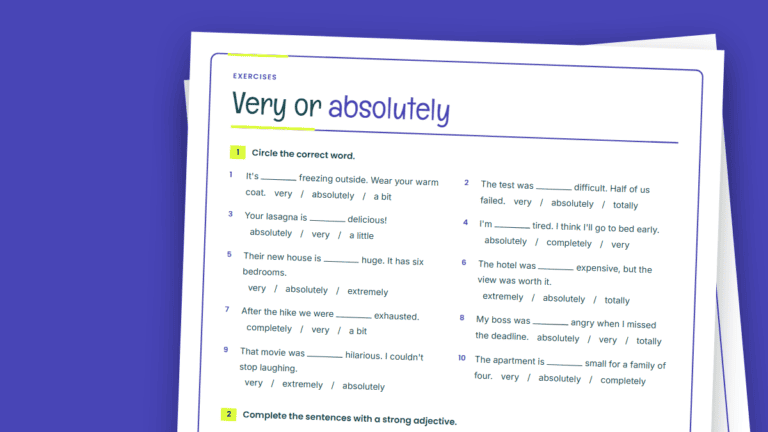
Very czy absolutely: ćwiczenia z odpowiedziami i karta pracy PDF
Very cold, ale absolutely freezing. Very good, ale absolutely amazing. Przymiotniki dzielą się na zwykłe i mocne, a każda grupa lubi inne…

Angielski z piosenek, które zostają w głowie
QuickSpeak Music: 10 piosenek pełnych gotowych zdań z życia. Posłuchaj pierwszej i zrób ćwiczenia, które zamieniają ją we własne wypowiedzi.
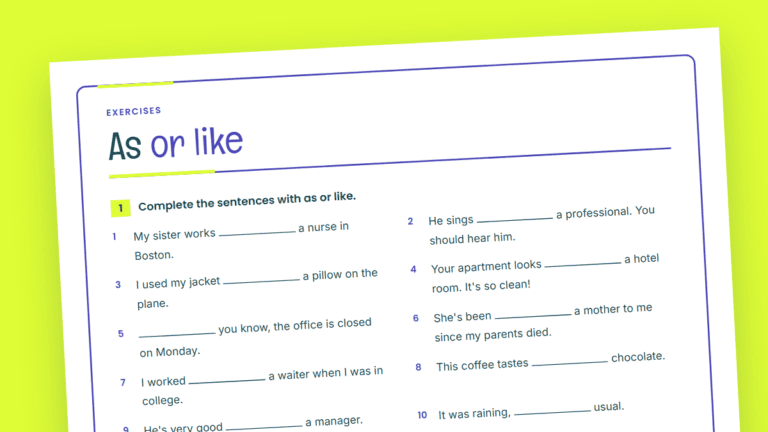
As czy like: ćwiczenia z odpowiedziami i karta pracy PDF
As i like po polsku często tłumaczysz tak samo: „jak” albo „jako”. Po angielsku to dwie różne rzeczy. As mówi, kim ktoś…
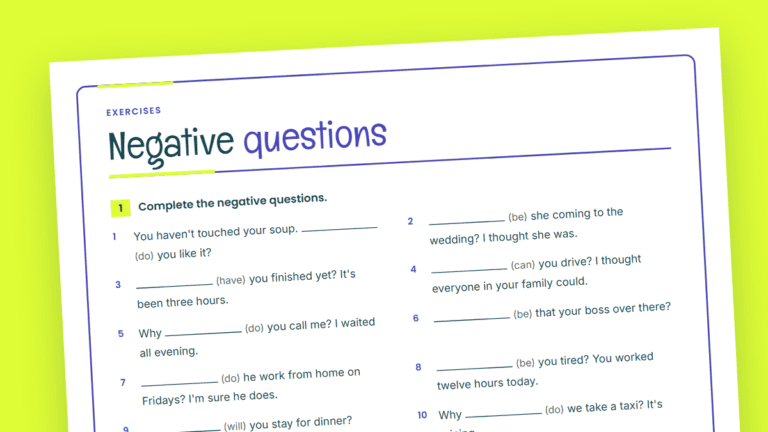
Pytania przeczące po angielsku: ćwiczenia z odpowiedziami i karta pracy PDF
Pytania przeczące słyszysz ciągle: Don't you like it? Isn't she coming? Why didn't you call? Pokazują zdziwienie, pomagają się upewnić albo coś…