
 4 min
Past Continuous opisuje to, co akurat trwało w przeszłości: co robiłeś wczoraj o ósmej, co działo się, kiedy zadzwonił telefon. Poniżej masz 47 zadań w sześciu zestawach, od was i were z -ing po przeczenia, pytania i zdania z when i while. Każde sprawdza się od razu, a po dobrej odpowiedzi możesz odsłuchać całe zdanie.
Wolisz papier? Pod ćwiczeniami jest karta pracy PDF do druku i osobna wersja z kluczem odpowiedzi.
Najpierw zasady? Budowę i użycie z przykładami masz w tekście Past Continuous: budowa i przykłady.
Ćwiczenie 1: I was working, they were talking
Wpisz czasownik w Past Continuous: was albo were i czasownik z -ing. Was stoi przy I, he, she, it, were przy you, we, they.
At nine this morning I ___ (drive) to work.
was driving
My parents ___ (sit) in the garden all afternoon.
were sitting
She ___ (talk) to a client, so I waited.
was talking
We ___ (have) breakfast at seven.
were having
The baby ___ (cry) all night.
was crying
You ___ (smile) in every photo from the trip.
were smiling
My boss ___ (stand) by the window when I came in.
was standing
It ___ (snow) when we landed in Denver.
was snowing
The kids ___ (run) around the backyard.
were running
I ___ (look) for a parking spot for twenty minutes.
was looking
Ćwiczenie 2: przeczenia i pytania
Uzupełnij przeczenie albo pytanie w Past Continuous. Skrót i pełna forma (was not, were not) liczą się tak samo. W pytaniu was albo were idzie przed osobę.
I ___ (not / listen), sorry. Can you say that again?
wasn’t listening | was not listening
They ___ (not / work) on Friday. The office was closed.
weren’t working | were not working
She ___ (not / wear) a coat, so she was freezing.
wasn’t wearing | was not wearing
We ___ (not / expect) so many guests.
weren’t expecting | were not expecting
___ you ___ (sleep) when I texted you?
Were ; sleeping
___ he ___ (drive) too fast?
Was ; driving
Where ___ you ___ (go) when I saw you downtown?
were ; going
Who ___ she ___ (talk) to on the phone?
was ; talking
Ćwiczenie 3: when czy while, trwało czy przerwało?
Wybierz poprawną formę. Dłuższa czynność, która trwała, stoi w Past Continuous. Krótkie zdarzenie, które ją przerwało, stoi w Past Simple. While łączysz zwykle z tym, co trwało.
I was making coffee when my phone ___.
- rang
- was ringing
- rings
We ___ through the park when it started to rain.
- walked
- were walking
- was walking
___ I was waiting in line, I read the news.
- While
- When
- During
She cut her finger while she ___ vegetables.
- chopped
- is chopping
- was chopping
The lights went out ___ we were having dinner.
- while
- during
- for
My husband ___ when I got home, so I didn’t wake him up.
- slept
- was sleeping
- were sleeping
What ___ when the accident happened?
- did you do
- were you doing
- you were doing
I ___ my keys while I was jogging.
- dropped
- was dropping
- were dropping
Ćwiczenie 4: wybierz poprawne zdanie
Najczęstsze pułapki: was zamiast were, brak -ing i did w pytaniu o to, co trwało.
Pick the correct sentence.
- We was watching a movie.
- We were watching a movie.
- We were watch a movie.
Pick the correct sentence.
- Was it raining this morning?
- Did it raining this morning?
- Was it rain this morning?
Pick the correct sentence.
- I didn’t working yesterday at noon.
- I wasn’t work yesterday at noon.
- I wasn’t working yesterday at noon.
Pick the correct sentence.
- They were arguing when I walked in.
- They arguing when I walked in.
- They was arguing when I walked in.
Pick the correct sentence.
- What you were doing at six?
- What were you doing at six?
- What did you doing at six?
Pick the correct sentence.
- While I cooked, the doorbell was ringing.
- While I was cook, the doorbell rang.
- While I was cooking, the doorbell rang.
Ćwiczenie 5: ułóż zdanie
Ułóż zdanie z rozsypanych słów. Tak opowiadasz, co się działo, kiedy coś się stało.
Powiedz, że pracowałeś z domu, kiedy przyszła paczka.
I was working from home when the package arrived.
Zapytaj, z kim ktoś rozmawiał na imprezie.
Who were you talking to at the party?
Powiedz, że w nocy mocno padało.
It was raining hard last night.
Powiedz, że nie słuchałeś, kiedy szef to wyjaśniał.
I wasn’t listening when my boss explained it.
Powiedz, że dzieci odrabiały lekcje, kiedy wróciłeś.
The kids were doing homework when I got back.
Zapytaj, czy ktoś jechał do pracy o ósmej.
Were you driving to work at eight?
Powiedz, że spotkałeś sąsiada, kiedy wyprowadzałeś psa.
I met my neighbor while I was walking the dog.
Ćwiczenie 6: znajdź błąd
W każdym zdaniu jest jeden błąd. Dotknij złego słowa, a zamieni się w poprawne.
My kids was playing outside all day.
My kids were playing outside all day.
She was wait for the bus in the rain.
She was waiting for the bus in the rain.
Were he working late last night?
Was he working late last night?
We wasn’t paying attention to the time.
We weren’t paying attention to the time.
It were snowing when we left the house.
It was snowing when we left the house.
Where was you going so early this morning?
Where were you going so early this morning?
They were siting in the lobby when I arrived.
They were sitting in the lobby when I arrived.
What did you doing at ten last night?
What were you doing at ten last night?
Karta pracy PDF z kluczem odpowiedzi
Karta pracy do druku
Te same zadania na papierze, A4, za darmo. Osobno wersja z odpowiedziami dla nauczyciela albo do samodzielnego sprawdzenia.
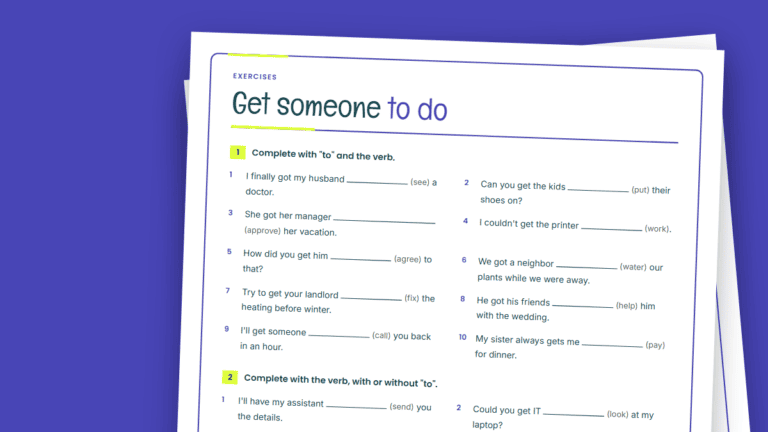
Get someone to do: ćwiczenia z odpowiedziami i karta pracy PDF
Get someone to do i have someone do przydają się, kiedy kogoś namawiasz, prosisz albo zlecasz mu zadanie: w pracy, w domu,…

Zacznij mówić po angielsku w 30 dni
Aktywator Mowy: codzienny trening mówienia na 15 minut. Krótkie historie, nagrania native speakerów i Twoje własne zdania na głos.
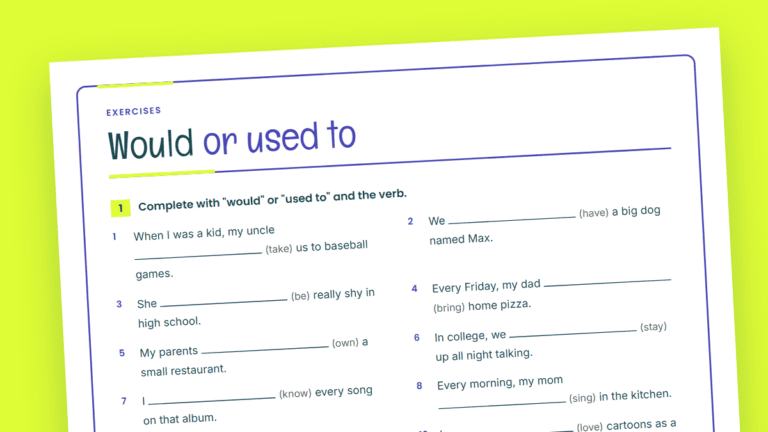
Would czy used to: ćwiczenia z odpowiedziami i karta pracy PDF
Would i used to przydają się, kiedy wspominasz: dzieciństwo, studia, dawną pracę. Czasem pasują oba, a czasem tylko jedno. Na początek masz…
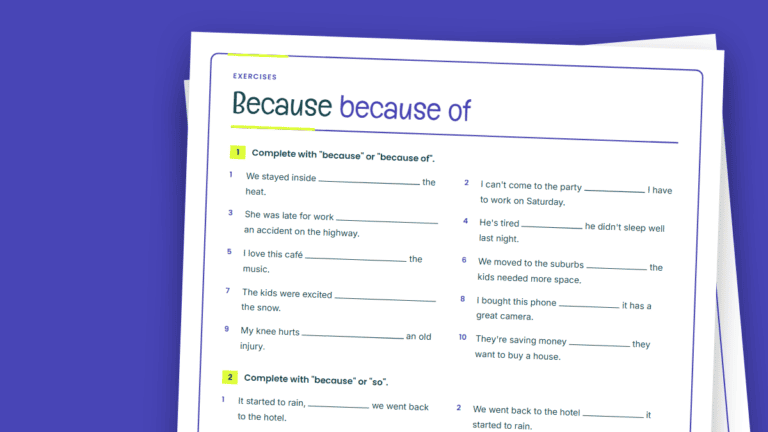
Because i because of: ćwiczenia z odpowiedziami i karta pracy PDF
Because i because of wyglądają prawie tak samo, ale po jednym idzie całe zdanie, a po drugim sam rzeczownik. Na początek masz…
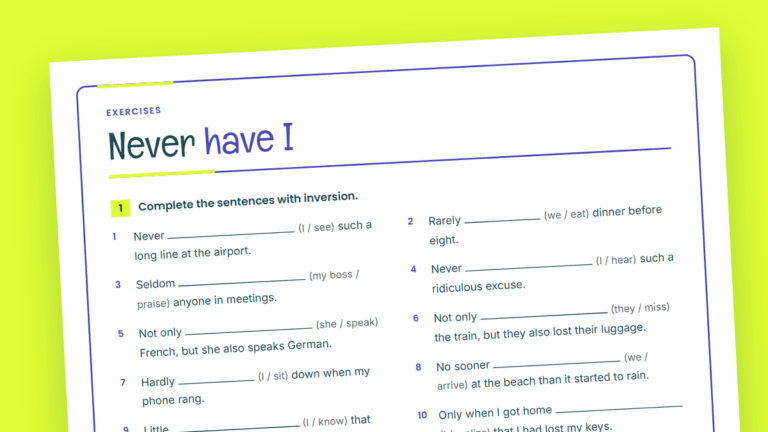
Inwersja: ćwiczenia z odpowiedziami i karta pracy PDF
Inwersja brzmi poważnie, ale słyszysz ją częściej, niż myślisz: w mailach z pracy, w opowieściach i w filmach. Na początek masz krótkie…

Angielski z piosenek, które zostają w głowie
QuickSpeak Music: 10 piosenek pełnych gotowych zdań z życia. Posłuchaj pierwszej i zrób ćwiczenia, które zamieniają ją we własne wypowiedzi.
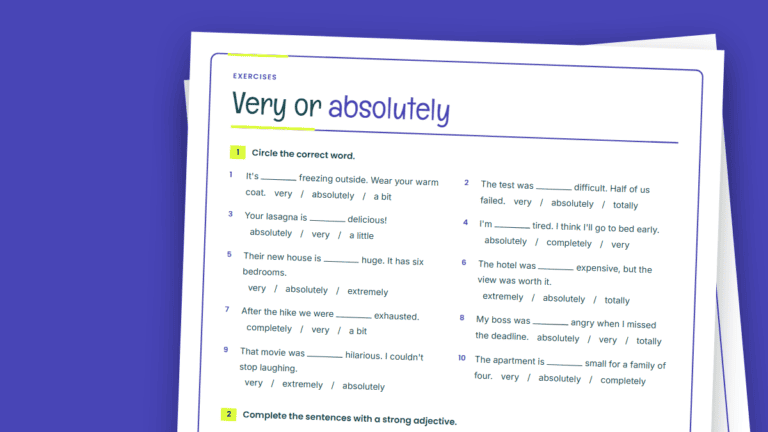
Very czy absolutely: ćwiczenia z odpowiedziami i karta pracy PDF
Very cold, ale absolutely freezing. Very good, ale absolutely amazing. Przymiotniki dzielą się na zwykłe i mocne, a każda grupa lubi inne…
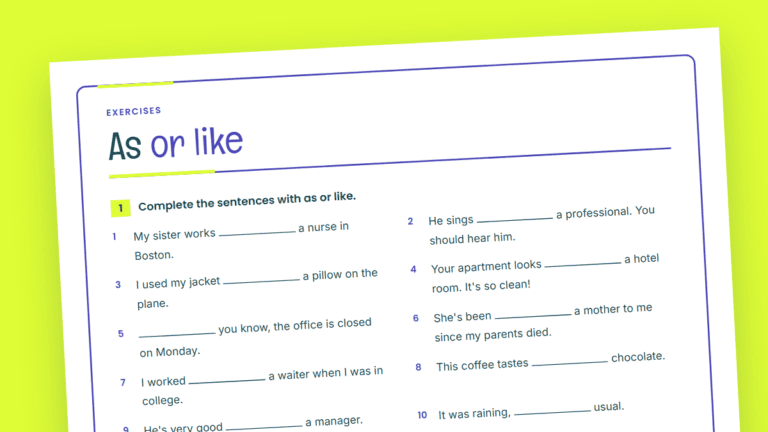
As czy like: ćwiczenia z odpowiedziami i karta pracy PDF
As i like po polsku często tłumaczysz tak samo: „jak” albo „jako”. Po angielsku to dwie różne rzeczy. As mówi, kim ktoś…