
 7 min
Pytania pośrednie brzmią uprzejmie i naturalnie: tak pytasz o drogę, w recepcji hotelu albo w rozmowie z kimś, kogo nie znasz. Na początek masz krótkie zasady, a pod nimi 52 zadania w sześciu zestawach, od Can you tell me where po I wonder if. Każde sprawdza się od razu, a po dobrej odpowiedzi możesz odsłuchać całe zdanie.
Wolisz papier? Pod ćwiczeniami jest karta pracy PDF do druku i osobna wersja z kluczem odpowiedzi.
Pytania pośrednie w skrócie
Grzeczny wstęp, a potem zwykłe zdanie
Zaczynasz od Can you tell me, Do you know albo Could you tell me, a dalej mówisz tak, jakbyś coś stwierdzał: najpierw osoba, potem czasownik. Pytająca jest tylko pierwsza część.
- Where is the bank? → Can you tell me where the bank is? (Gdzie jest bank? → Możesz mi powiedzieć, gdzie jest bank?)
- Who is that man? → Do you know who that man is? (Kto to jest? → Wiesz, kto to jest?)
Znikają do, does i did
W drugiej części nie ma do, does ani did. Czasownik wraca do zwykłej formy: przy he, she, it dostaje -s, a w przeszłości ma formę przeszłą.
- What time does the gym open? → Do you know what time the gym opens? (Wiesz, o której otwierają siłownię?)
- Where did you buy it? → Can I ask where you bought it? (Mogę zapytać, gdzie to kupiłeś?)
If albo whether przy pytaniach tak czy nie
Kiedy pytanie nie ma słowa pytającego (where, what, why), wstawiasz if albo whether. Oba znaczą „czy”, a if jest częstsze w rozmowie.
- Is the pool open? → Do you know if the pool is open? (Wiesz, czy basen jest otwarty?)
- Did Anna call? → I wonder whether Anna called. (Ciekawe, czy Anna dzwoniła.)
I wonder: pytanie, które jest zdaniem
I wonder znaczy „ciekawe” albo „zastanawiam się”. Szyk jest taki sam jak w innych pytaniach pośrednich, ale na końcu stawiasz kropkę, bo to zdanie, a nie pytanie.
- I wonder why they are so late. (Ciekawe, czemu tak się spóźniają.)
- I wonder if she will like it. (Ciekawe, czy jej się spodoba.)
Ćwiczenie 1: zamień na pytanie pośrednie
Dokończ pytanie pośrednie. Najpierw osoba albo rzecz, potem czasownik, bez do, does i did.
Where is the post office? → Can you tell me where ___?
the post office is
What time does the bank close? → Do you know what time ___?
the bank closes
How long does the flight take? → Can you tell me how long ___?
the flight takes
Where did you buy that jacket? → Can I ask where ___ that jacket?
you bought
Why is the store closed? → I wonder why ___.
the store is closed
Who is that woman? → Do you know who ___?
that woman is
What does this word mean? → Could you tell me what ___?
this word means
How much do the tickets cost? → Do you have any idea how much ___?
the tickets cost
Where are you staying? → Can I ask where ___?
you are staying | you’re staying
When did they move to Boston? → Do you know when ___ to Boston?
they moved
What is your manager’s name? → Can you tell me what ___?
your manager’s name is
Ćwiczenie 2: Do you know if, I wonder whether
To pytania typu tak albo nie. Wpisz if albo whether i resztę zdania w zwykłym szyku. Oba słowa są poprawne.
Do they deliver on Sundays? → Do you know ___ on Sundays?
if they deliver | whether they deliver
Is the pool open today? → Can you tell me ___ today?
if the pool is open | whether the pool is open
Did Anna get the job? → I wonder ___ the job.
if Anna got | whether Anna got
Can I pay by card? → Do you know ___ by card?
if I can pay | whether I can pay
Will it rain tomorrow? → I wonder ___ tomorrow.
if it will rain | whether it will rain | if it’ll rain | whether it’ll rain
Has Tom called back? → Do you know ___ back?
if Tom has called | whether Tom has called | if Tom’s called | whether Tom’s called
Does this bus go downtown? → Could you tell me ___ downtown?
if this bus goes | whether this bus goes
Are the kids asleep? → I wonder ___.
if the kids are asleep | whether the kids are asleep
Is there a gas station near here? → Do you know ___ near here?
if there is a gas station | whether there is a gas station | if there’s a gas station | whether there’s a gas station
Ćwiczenie 3: wybierz dobry szyk
Wybierz brakującą część. Po grzecznym wstępie szyk jest zwykły, jak w zdaniu oznajmującym.
Do you know where ___?
- Kate lives
- does Kate live
- lives Kate
Can you tell me what time ___?
- does the show start
- the show starts
- starts the show
I wonder ___ she is so upset.
- why
- that
- does
Do you know ___ the hotel has parking?
- if
- that
- what
Could you tell me how ___ here?
- did you get
- you got
- got you
I wonder what ___ for my birthday.
- he is planning
- is he planning
- does he plan
Do you remember when ___?
- did we meet
- we met
- met we
Do you have any idea how much ___?
- this car costs
- does this car cost
- costs this car
Can I ask ___ you are moving to Texas?
- why
- what
- that
Ćwiczenie 4: wybierz poprawne zdanie
Najczęstsze pułapki: szyk pytający po Do you know i do albo does w drugiej części zdania.
Pick the correct sentence.
- Do you know where is the elevator?
- Do you know where the elevator is?
- Do you know where does the elevator is?
Pick the correct sentence.
- Can you tell me what time does the gym open?
- Can you tell me what time opens the gym?
- Can you tell me what time the gym opens?
Pick the correct sentence.
- I wonder if she got my message.
- I wonder did she get my message.
- I wonder if did she get my message.
Pick the correct sentence.
- Could you tell me how much does it cost?
- Could you tell me how much it costs?
- Could you tell me how much costs it?
Pick the correct sentence.
- Do you know whether is the museum open on Mondays?
- Do you know whether the museum is open on Mondays?
- Do you know whether the museum it is open on Mondays?
Pick the correct sentence.
- I wonder why did he quit his job.
- I wonder why he quit his job.
- I wonder why does he quit his job.
Pick the correct sentence.
- Can you tell me who I should talk to?
- Can you tell me who should I talk to?
- Can you tell me who I should to talk to?
Ćwiczenie 5: ułóż pytanie
Ułóż zdanie z rozsypanych słów. Tak pytasz uprzejmie w sklepie, w pracy i w podróży.
Zapytaj uprzejmie, gdzie jest najbliższy bankomat.
Can you tell me where the nearest ATM is?
Zapytaj, czy ktoś wie, o której zaczyna się spotkanie.
Do you know what time the meeting starts?
Powiedz, że ciekawe, czy ona przyjdzie.
I wonder if she will come.
Zapytaj, czy ktoś wie, czy sklep jest dziś otwarty.
Do you know if the store is open today?
Zapytaj uprzejmie, ile kosztuje ten pokój.
Could you tell me how much this room costs?
Zapytaj, czy ktoś ma pojęcie, gdzie są Twoje klucze.
Do you have any idea where my keys are?
Powiedz, że ciekawe, czemu on jeszcze nie zadzwonił.
I wonder why he hasn’t called yet.
Zapytaj, czy możesz zapytać, gdzie on pracuje.
Can I ask where he works?
Ćwiczenie 6: znajdź błąd
W każdym zdaniu jest jeden błąd: zły szyk albo zła forma czasownika. Dotknij złego słowa, a zamieni się w poprawne.
Can you tell me where is Tom?
Can you tell me where Tom is?
I wonder where is she now.
I wonder where she is now.
Do you know if the bank open on Saturdays?
Do you know if the bank opens on Saturdays?
I wonder why are they so late.
I wonder why they are so late.
Do you know when the movie start?
Do you know when the movie starts?
Can I ask how old are you?
Can I ask how old you are?
Do you know what time is it?
Do you know what time it is?
I wonder whether she like her new job.
I wonder whether she likes her new job.
Karta pracy PDF z kluczem odpowiedzi
Karta pracy do druku
Te same zadania na papierze, A4, za darmo. Osobno wersja z odpowiedziami dla nauczyciela albo do samodzielnego sprawdzenia.
Get someone to do: ćwiczenia z odpowiedziami i karta pracy PDF
Get someone to do i have someone do przydają się, kiedy kogoś namawiasz, prosisz albo zlecasz mu zadanie: w pracy, w domu,…

Zacznij mówić po angielsku w 30 dni
Aktywator Mowy: codzienny trening mówienia na 15 minut. Krótkie historie, nagrania native speakerów i Twoje własne zdania na głos.
Would czy used to: ćwiczenia z odpowiedziami i karta pracy PDF
Would i used to przydają się, kiedy wspominasz: dzieciństwo, studia, dawną pracę. Czasem pasują oba, a czasem tylko jedno. Na początek masz…
Because i because of: ćwiczenia z odpowiedziami i karta pracy PDF
Because i because of wyglądają prawie tak samo, ale po jednym idzie całe zdanie, a po drugim sam rzeczownik. Na początek masz…
Inwersja: ćwiczenia z odpowiedziami i karta pracy PDF
Inwersja brzmi poważnie, ale słyszysz ją częściej, niż myślisz: w mailach z pracy, w opowieściach i w filmach. Na początek masz krótkie…

Angielski z piosenek, które zostają w głowie
QuickSpeak Music: 10 piosenek pełnych gotowych zdań z życia. Posłuchaj pierwszej i zrób ćwiczenia, które zamieniają ją we własne wypowiedzi.
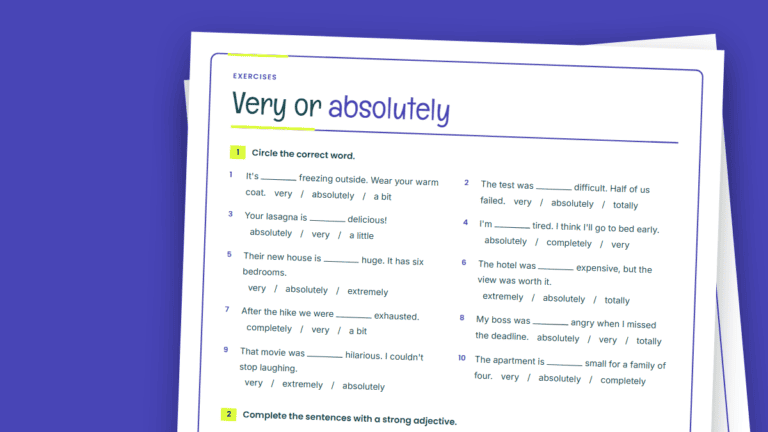
Very czy absolutely: ćwiczenia z odpowiedziami i karta pracy PDF
Very cold, ale absolutely freezing. Very good, ale absolutely amazing. Przymiotniki dzielą się na zwykłe i mocne, a każda grupa lubi inne…
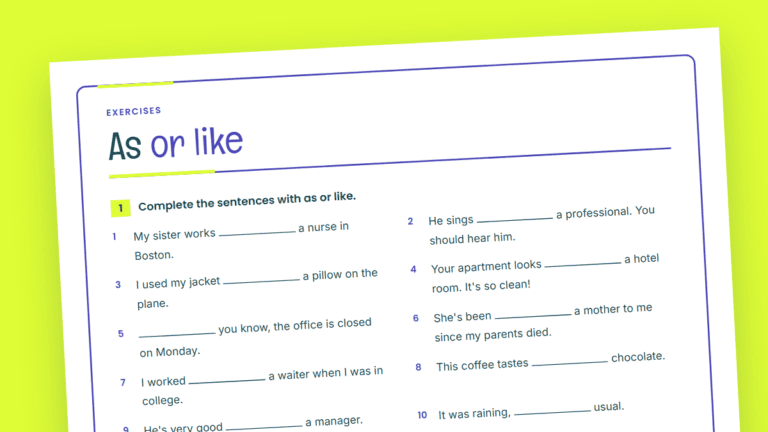
As czy like: ćwiczenia z odpowiedziami i karta pracy PDF
As i like po polsku często tłumaczysz tak samo: „jak” albo „jako”. Po angielsku to dwie różne rzeczy. As mówi, kim ktoś…