
 4 min
Present Perfect łączy przeszłość z teraz: co już zrobiłeś, czego jeszcze nie, gdzie byłeś w życiu i od jak dawna coś trwa. Poniżej masz 50 zadań w sześciu zestawach: have i has z trzecią formą, ever, never, already, yet i just, for i since, a na koniec wybór między Present Perfect a Past Simple. Każde zadanie sprawdza się od razu, a po dobrej odpowiedzi możesz odsłuchać całe zdanie.
Wolisz papier? Pod ćwiczeniami jest karta pracy PDF do druku i osobna wersja z kluczem odpowiedzi.
Najpierw zasady? Budowę i użycie z przykładami masz w tekście Present Perfect: kiedy go używać i przykłady.
Ćwiczenie 1: have lost, has finished, have been
Wpisz have albo has i trzecią formę czasownika. Has stoi przy he, she i it. Skrót (’ve, 's) też się liczy.
I ___ (lose) my wallet.
have lost | 've lost
She ___ (finish) the report.
has finished | 's finished
We ___ (buy) a new car.
have bought | 've bought
My parents ___ (move) to Florida.
have moved | 've moved
He ___ (break) his arm.
has broken | 's broken
I ___ (see) this movie three times.
have seen | 've seen
They ___ (be) to Japan twice.
have been | 've been
Tom ___ (write) to the client twice.
has written | 's written
The price ___ (go) up again.
has gone | 's gone
Wow, you ___ (grow) so much!
have grown | 've grown
My boss ___ (leave) for the day.
has left | 's left
I’m sorry, I ___ (forget) your name.
have forgotten | 've forgotten
Ćwiczenie 2: ever, never, already, yet, just
Wybierz brakujące słowo. Ever w pytaniach o doświadczenie, never znaczy nigdy, already to już, yet to już albo jeszcze w pytaniach i przeczeniach, just to właśnie.
Have you ___ been to New York?
- ever
- yet
- already
I’ve ___ met her. Who is she?
- ever
- never
- yet
Don’t worry, I’ve ___ paid the bill.
- yet
- ever
- already
Has the package arrived ___?
- yet
- never
- just
She has ___ left. You missed her by a minute.
- yet
- just
- ever
We haven’t decided ___.
- already
- yet
- just
I’ve ___ eaten sushi. I’d like to try it.
- never
- ever
- already
This is the best pizza I’ve ___ had.
- never
- yet
- ever
He’s ___ called. He’s on his way.
- ever
- yet
- just
Ćwiczenie 3: for czy since?
Wpisz for albo since. For stoi przed okresem (ten years, a long time), since przed punktem w czasie (2019, Monday).
I’ve lived here ___ 2019.
since
We’ve been married ___ ten years.
for
She has worked at the bank ___ March.
since
I haven’t seen him ___ a long time.
for
They’ve had their dog ___ three years.
for
He hasn’t called ___ Monday.
since
I’ve known Kate ___ we were kids.
since
I’ve had this phone ___ six months.
for
Ćwiczenie 4: Present Perfect czy Past Simple?
Gdy w zdaniu jest zakończony czas (yesterday, last month, two years ago, in 2020, when), wybierasz Past Simple. Present Perfect zostaje dla since, for do dziś i ever.
We ___ in this house since 2015.
- lived
- have lived
- live
I ___ him yesterday at the gym.
- saw
- have seen
- has seen
She ___ her job two years ago.
- has left
- have left
- left
I ___ him since Monday.
- didn’t see
- don’t see
- haven’t seen
When ___ you buy that jacket?
- did
- have
- has
___ you ever eaten Thai food?
- Did
- Have
- Were
My brother ___ in London for five years. Now he lives in Berlin.
- has lived
- lived
- lives
I ___ a new job last month.
- got
- have gotten
- have got
Ćwiczenie 5: ułóż pytanie
Ułóż pytanie z rozsypanych słów. To pytania o doświadczenia i o to, jak długo coś trwa.
Zapytaj, czy ktoś był kiedyś w Kanadzie.
Have you ever been to Canada?
Zapytaj, jak długo ktoś tu mieszka.
How long have you lived here?
Zapytaj, czy ktoś już skończył.
Have you finished yet?
Zapytaj, czy twoja siostra już dzwoniła.
Has your sister called yet?
Zapytaj, jak długo ktoś zna Toma.
How long have you known Tom?
Zapytaj, czy ktoś kiedyś próbował meksykańskiego jedzenia.
Have you ever tried Mexican food?
Ćwiczenie 6: znajdź błąd
W każdym zdaniu jest błąd (w jednym zdaniu trzeba zmienić dwa słowa). Dotknij złego słowa, a zamieni się w poprawne.
I have saw this movie before.
I have seen this movie before.
She have finished the report.
She has finished the report.
We have been married since ten years.
We have been married for ten years.
Have you seen the game last night?
Did you see the game last night?
He has went home already.
He has gone home already.
Have you ever be to Spain?
Have you ever been to Spain?
I’ve knew her for years.
I’ve known her for years.
Karta pracy PDF z kluczem odpowiedzi
Karta pracy do druku
Te same zadania na papierze, A4, za darmo. Osobno wersja z odpowiedziami dla nauczyciela albo do samodzielnego sprawdzenia.
Get someone to do: ćwiczenia z odpowiedziami i karta pracy PDF
Get someone to do i have someone do przydają się, kiedy kogoś namawiasz, prosisz albo zlecasz mu zadanie: w pracy, w domu,…

Zacznij mówić po angielsku w 30 dni
Aktywator Mowy: codzienny trening mówienia na 15 minut. Krótkie historie, nagrania native speakerów i Twoje własne zdania na głos.
Would czy used to: ćwiczenia z odpowiedziami i karta pracy PDF
Would i used to przydają się, kiedy wspominasz: dzieciństwo, studia, dawną pracę. Czasem pasują oba, a czasem tylko jedno. Na początek masz…
Because i because of: ćwiczenia z odpowiedziami i karta pracy PDF
Because i because of wyglądają prawie tak samo, ale po jednym idzie całe zdanie, a po drugim sam rzeczownik. Na początek masz…
Inwersja: ćwiczenia z odpowiedziami i karta pracy PDF
Inwersja brzmi poważnie, ale słyszysz ją częściej, niż myślisz: w mailach z pracy, w opowieściach i w filmach. Na początek masz krótkie…

Angielski z piosenek, które zostają w głowie
QuickSpeak Music: 10 piosenek pełnych gotowych zdań z życia. Posłuchaj pierwszej i zrób ćwiczenia, które zamieniają ją we własne wypowiedzi.
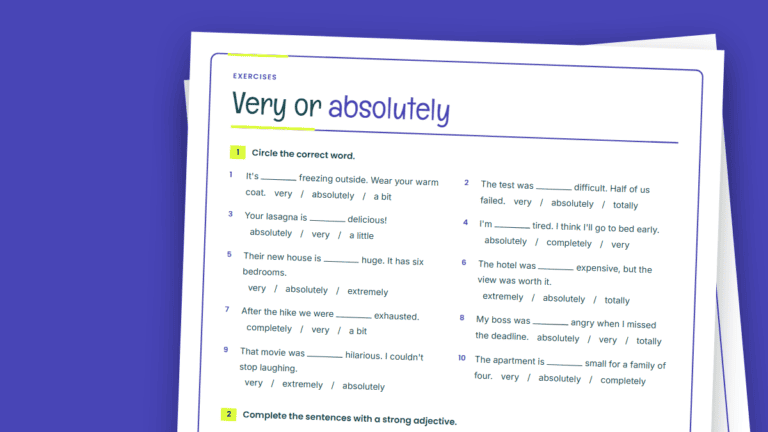
Very czy absolutely: ćwiczenia z odpowiedziami i karta pracy PDF
Very cold, ale absolutely freezing. Very good, ale absolutely amazing. Przymiotniki dzielą się na zwykłe i mocne, a każda grupa lubi inne…
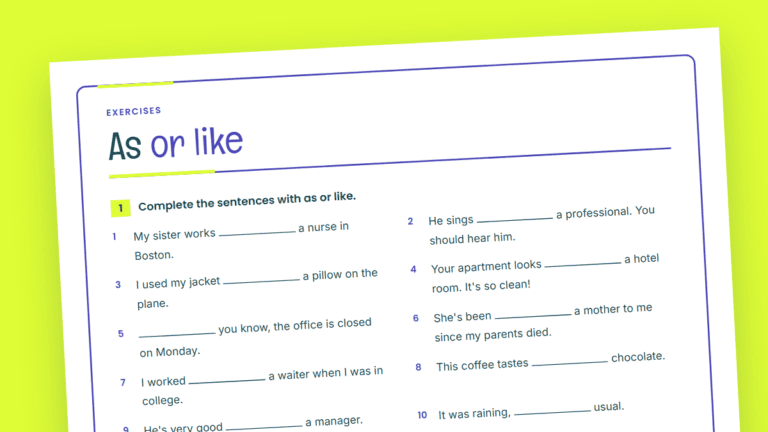
As czy like: ćwiczenia z odpowiedziami i karta pracy PDF
As i like po polsku często tłumaczysz tak samo: „jak” albo „jako”. Po angielsku to dwie różne rzeczy. As mówi, kim ktoś…