
 5 min
Question tags to te krótkie końcówki w stylu isn’t it? albo don’t you?, którymi Amerykanie upewniają się, że dobrze myślą, i zapraszają drugą osobę do rozmowy. Po polsku mówisz „prawda?” i masz spokój. Po angielsku tag zależy od czasownika w zdaniu, dlatego trzeba go trochę poćwiczyć.
Poniżej masz najpierw zasady w pigułce, a potem 51 zadań w sześciu zestawach. Każde sprawdza się od razu, a po dobrej odpowiedzi możesz odsłuchać całe zdanie. Wolisz papier? Pod ćwiczeniami jest karta pracy PDF do druku i osobna wersja z kluczem.
Zasady w skrócie
Plus to minus, minus to plus
Gdy zdanie jest twierdzące, tag jest przeczący. Gdy zdanie jest przeczące, tag jest twierdzący. W tagu zawsze stoi zaimek, a nie imię: Anna zamienia się w she, this w it.
- You’re from Chicago, aren’t you? (Jesteś z Chicago, prawda?)
- Anna doesn’t eat meat, does she? (Anna nie je mięsa, prawda?)
- This is your car, isn’t it? (To twój samochód, prawda?)
Ten sam czasownik pomocniczy
Powtarzasz to, co już jest w zdaniu: be, have, will, can, should. Jeśli zdanie ma tylko zwykły czasownik, do tagu wchodzi do, does albo did.
- She can drive, can’t she? (Ona umie prowadzić, prawda?)
- You’ve met my wife, haven’t you? (Poznałeś moją żonę, prawda?)
- You work from home, don’t you? (Pracujesz z domu, prawda?)
- They moved here last year, didn’t they? (Przeprowadzili się tu w zeszłym roku, prawda?)
Trzy wyjątki
Po I am tag brzmi aren’t I. Po Let’s mówisz shall we. Po prośbie w trybie rozkazującym dodajesz will you albo can you, co brzmi łagodniej niż samo polecenie.
- I’m next, aren’t I? (Jestem następny, prawda?)
- Let’s order pizza, shall we? (Zamówmy pizzę, co?)
- Close the window, will you? (Zamknij okno, dobrze?)
Melodia zmienia sens
Gdy ton na końcu opada, tylko się upewniasz i spodziewasz się „tak”. Gdy ton idzie w górę, naprawdę pytasz, bo nie wiesz. Na początek wystarczy opadający ton, bo tak brzmi większość tagów w rozmowie.
- It’s really cold today, isn’t it? (Ale dziś zimno, co? (ton w dół))
- You didn’t lock the door, did you? (Nie zamknąłeś drzwi? (ton w górę, naprawdę nie wiesz))
Ćwiczenie 1: isn’t it, aren’t you, can’t you
Dopisz tag. W zdaniu jest już be, have, will albo can, więc powtarzasz ten sam czasownik z odwrotnym znakiem.
You’re from Chicago, ___?
aren’t you
It’s really cold today, ___?
isn’t it
Your parents aren’t home yet, ___?
are they
She was at the party last night, ___?
wasn’t she
You can drive, ___?
can’t you
We won’t be late, ___?
will we
Tom has finished the report, ___?
hasn’t he
They weren’t happy about the price, ___?
were they
You’ll call me tomorrow, ___?
won’t you
This is your car, ___?
isn’t it
You haven’t met my wife, ___?
have you
I’m next in line, ___?
aren’t I
There’s a pharmacy near here, ___?
isn’t there
Ćwiczenie 2: tagi z do, does i did
Tu w zdaniu nie ma czasownika pomocniczego, więc tag tworzysz z do, does albo did.
You work from home, ___?
don’t you
Your sister lives in Boston, ___?
doesn’t she
You didn’t lock the door, ___?
did you
He likes his new job, ___?
doesn’t he
They moved here last year, ___?
didn’t they
You don’t eat meat, ___?
do you
The store opens at nine, ___?
doesn’t it
She called you yesterday, ___?
didn’t she
Mark doesn’t drink coffee, ___?
does he
Ćwiczenie 3: wybierz tag
Wybierz pasujący tag. Uważaj na wyjątki: aren’t I, shall we i prośby z will you.
You’ve been to New York, ___?
- haven’t you
- don’t you
- didn’t you
She doesn’t speak Spanish, ___?
- doesn’t she
- does she
- is she
I’m late again, ___?
- am I
- isn’t it
- aren’t I
Close the window, ___?
- will you
- do you
- don’t you
Let’s take a break, ___?
- do we
- shall we
- don’t we
Your boss was angry, ___?
- didn’t he
- wasn’t he
- isn’t he
You can’t swim, ___?
- can’t you
- do you
- can you
They’ll be here at six, ___?
- won’t they
- will they
- aren’t they
We should leave soon, ___?
- should we
- shouldn’t we
- don’t we
Ćwiczenie 4: wybierz poprawne zdanie
Najczęstsze pułapki: it zamiast she, zły czasownik w tagu i am I not zamiast aren’t I.
Pick the correct sentence.
- She’s a nurse, isn’t it?
- She’s a nurse, isn’t she?
- She’s a nurse, doesn’t she?
Pick the correct sentence.
- You didn’t see my keys, did you?
- You didn’t see my keys, didn’t you?
- You didn’t see my keys, do you?
Pick the correct sentence.
- I’m right, am not I?
- I’m right, isn’t it?
- I’m right, aren’t I?
Pick the correct sentence.
- He works late on Fridays, doesn’t he?
- He works late on Fridays, isn’t he?
- He works late on Fridays, don’t he?
Pick the correct sentence.
- Let’s go home, don’t we?
- Let’s go home, shall we?
- Let’s go home, will we?
Pick the correct sentence.
- You haven’t paid yet, haven’t you?
- You haven’t paid yet, did you?
- You haven’t paid yet, have you?
Ćwiczenie 5: ułóż zdanie przed tagiem
Ułóż pierwszą część pytania. Tag masz w nawiasie: jeśli jest przeczący, zdanie ma być twierdzące, i odwrotnie.
Nie byłeś tu wcześniej (have you?).
You haven’t been here before.
Ona pracuje w szpitalu (doesn’t she?).
She works at a hospital.
Oni nie przyjdą na kolację (are they?).
They aren’t coming to dinner.
Wczoraj długo pracowałeś (didn’t you?).
You worked late yesterday.
Ten hotel jest dość drogi (isn’t it?).
This hotel is pretty expensive.
Twój brat umie gotować (can’t he?).
Your brother can cook.
Ćwiczenie 6: znajdź błąd
W każdym zdaniu jest jeden błąd, zawsze w tagu. Dotknij złego słowa, a zamieni się w poprawne.
She’s your sister, isn’t it?
She’s your sister, isn’t she?
You live near here, aren’t you?
You live near here, don’t you?
He didn’t call you, didn’t he?
He didn’t call you, did he?
I’m too early, isn’t I?
I’m too early, aren’t I?
They’ve already left, didn’t they?
They’ve already left, haven’t they?
Your phone wasn’t cheap, wasn’t it?
Your phone wasn’t cheap, was it?
You’ll help me, don’t you?
You’ll help me, won’t you?
Let’s start, do we?
Let’s start, shall we?
Karta pracy PDF z kluczem odpowiedzi
Karta pracy do druku
Te same zadania na papierze, A4, za darmo. Osobno wersja z odpowiedziami dla nauczyciela albo do samodzielnego sprawdzenia.
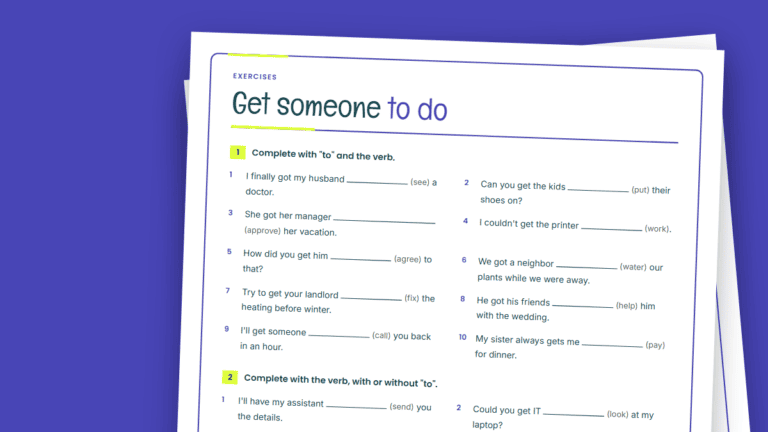
Get someone to do: ćwiczenia z odpowiedziami i karta pracy PDF
Get someone to do i have someone do przydają się, kiedy kogoś namawiasz, prosisz albo zlecasz mu zadanie: w pracy, w domu,…

Zacznij mówić po angielsku w 30 dni
Aktywator Mowy: codzienny trening mówienia na 15 minut. Krótkie historie, nagrania native speakerów i Twoje własne zdania na głos.
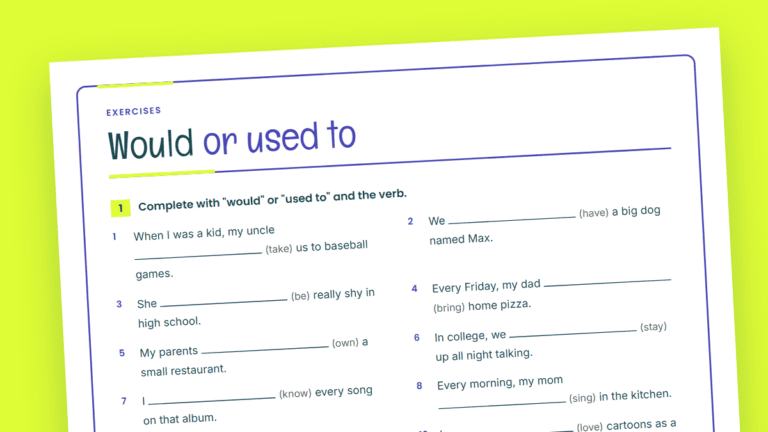
Would czy used to: ćwiczenia z odpowiedziami i karta pracy PDF
Would i used to przydają się, kiedy wspominasz: dzieciństwo, studia, dawną pracę. Czasem pasują oba, a czasem tylko jedno. Na początek masz…
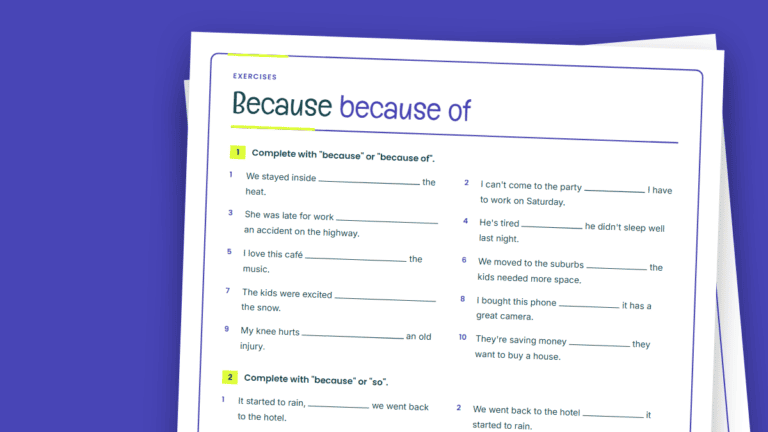
Because i because of: ćwiczenia z odpowiedziami i karta pracy PDF
Because i because of wyglądają prawie tak samo, ale po jednym idzie całe zdanie, a po drugim sam rzeczownik. Na początek masz…
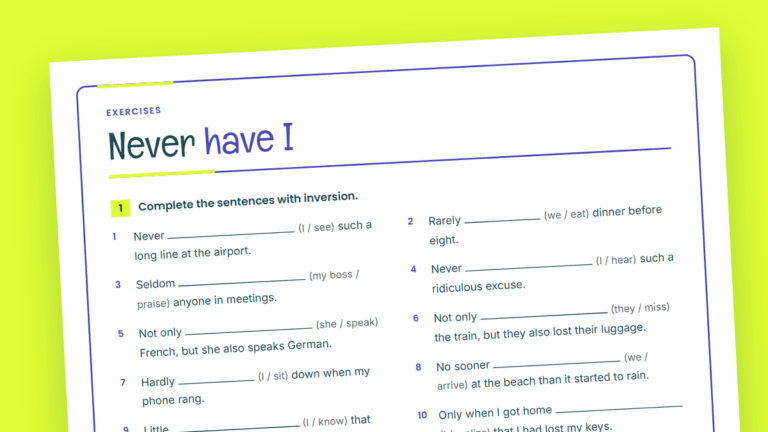
Inwersja: ćwiczenia z odpowiedziami i karta pracy PDF
Inwersja brzmi poważnie, ale słyszysz ją częściej, niż myślisz: w mailach z pracy, w opowieściach i w filmach. Na początek masz krótkie…

Angielski z piosenek, które zostają w głowie
QuickSpeak Music: 10 piosenek pełnych gotowych zdań z życia. Posłuchaj pierwszej i zrób ćwiczenia, które zamieniają ją we własne wypowiedzi.
Very czy absolutely: ćwiczenia z odpowiedziami i karta pracy PDF
Very cold, ale absolutely freezing. Very good, ale absolutely amazing. Przymiotniki dzielą się na zwykłe i mocne, a każda grupa lubi inne…
As czy like: ćwiczenia z odpowiedziami i karta pracy PDF
As i like po polsku często tłumaczysz tak samo: „jak” albo „jako”. Po angielsku to dwie różne rzeczy. As mówi, kim ktoś…